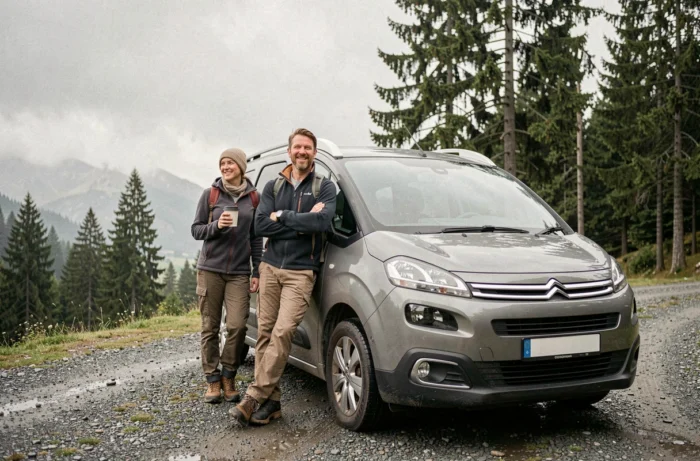
The Campster, produced by Pössl based on the Citroën SpaceTourer, occupies a unique niche in the compact camper van market. Neither a classic van nor a motorhome, this vehicle attracts a variety of profiles, from weekend couples to long-term travelers. Feedback from owners, scattered across specialized forums, Facebook groups, and review platforms, paints a nuanced picture where real qualities coexist with recurring friction points.
Technical issues reported by Campster Citroën owners
Discussions on specialized forums, particularly the German-speaking Pösslforum, highlight a persistent issue: the AdBlue system and its malfunctions. Warning lights that come on for no apparent reason, lack of pressure in the tank, random error messages. Several owners report visits to the workshop without a definitive resolution.
The question of manufacturer support remains unclear. Field feedback varies: some users receive warranty intervention, while others face refusal on the grounds that the issue falls under the converter’s responsibility and not Citroën’s.
This boundary of responsibility between the manufacturer of the base vehicle and Pössl is a major irritant. Forums show that the division of manufacturer warranty/converter warranty lacks clarity at the time of purchase.
To better understand what users think of the Campster Citroën, it is essential to distinguish between issues related to the Citroën base and those attributable to the Pössl transformation, something potential buyers do not always do.
Depreciation and residual value of the Campster: a still opaque market
The used market for the Campster is already active. Recent models, from 2022 to 2025 with low mileage, appear on specialized platforms like Autoline at prices that remain high, sometimes close to the price of new. This price stability might be reassuring, but it masks a more uncertain reality.
Depreciation forecasting tools, like the one from Autokostencheck, explicitly state that they do not have a sufficient database to establish a reliable residual value curve for the Campster 2.0 HDI. The model is considered too recent or too atypical in statistical databases. No robust depreciation forecast currently exists for this vehicle.
For a used buyer, this means there is no objective benchmark for negotiating the price. The seller sets their value based on the visible market, not on a documented depreciation curve. The available data does not allow for a conclusion on whether the Campster will retain its value better than a Volkswagen California or a Marco Polo in the long term.
Campster layout: what users like and what causes issues in daily life
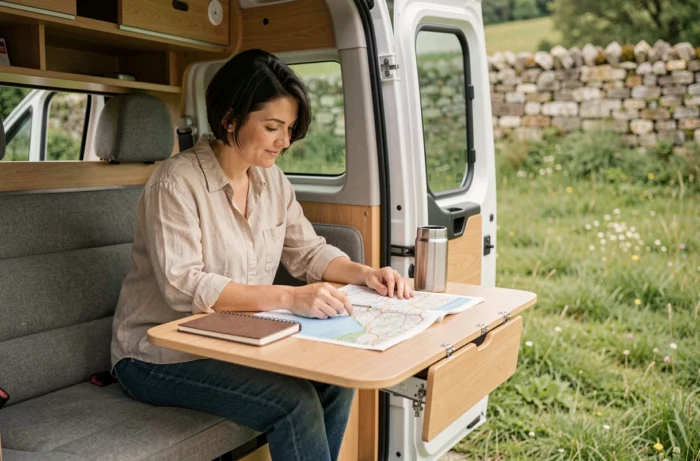
Regarding the layout, owners’ opinions converge quite clearly. The compact format of the Campster, built on a passenger vehicle base, gives it a real advantage in urban driving and parking. The pop-up roof provides additional sleeping space, and the modularity of the interior space (removable seats, removable or integrated kitchen depending on the version) appeals to users who alternate between daily use and getaways.
Positive points frequently mentioned in feedback include:
- The compactness of the vehicle, which allows parking like a regular car and accessing city centers, including in low-emission zones (LEZ) with the recent diesel engine
- The quality of the integrated kitchen, often deemed functional for a vehicle of this size, with sufficient basic equipment for short autonomy
- The pop-up roof, appreciated for the space gain while parked and the additional bed it provides
On the other hand, criticisms focus on concrete aspects of life on board. Thermal and acoustic insulation remains the most frequently cited weak point. In winter or at altitude, owners attempting long-term travel report insufficient thermal comfort without additional heating. The limited storage volume forces drastic choices regarding onboard equipment.

The issue of a permanent bed
Several owners note the absence of a permanent bed in the standard configuration. Setting up and taking down the bed every evening becomes an irritant for those traveling for several weeks in a row. This point distinguishes the Campster from longer converted vans, which often offer a fixed bed at the rear.
Choosing the Campster against competitors: buyers’ trade-offs
Discussions in Facebook groups and forums show that the Campster is often compared to the Volkswagen California and the converted Renault Trafic. The choice hinges on three main criteria: purchase price, vehicle size, and after-sales service network.
The Campster is generally priced below the California, which attracts first-time buyers of camper vans. The BlueHDI engine in the high-power version offers a driving pleasure that owners praise, especially on highways and in mountainous areas.
The after-sales service network is a point of concern. Pössl, a German manufacturer, has a less dense network of authorized repairers in France compared to Volkswagen. Owners who encounter a conversion issue sometimes have to travel a significant distance to find a competent workshop. This factor weighs in the purchasing decision, especially for users considering the Campster as their primary vehicle.
The compact converted van market is evolving rapidly, and the Citroën Campster holds a unique position within it. Owner feedback confirms an endearing vehicle, capable of appealing through its versatility, but which requires buyers to carefully assess the limitations of a compact format, particularly regarding insulation, after-sales service, and warranty clarity.