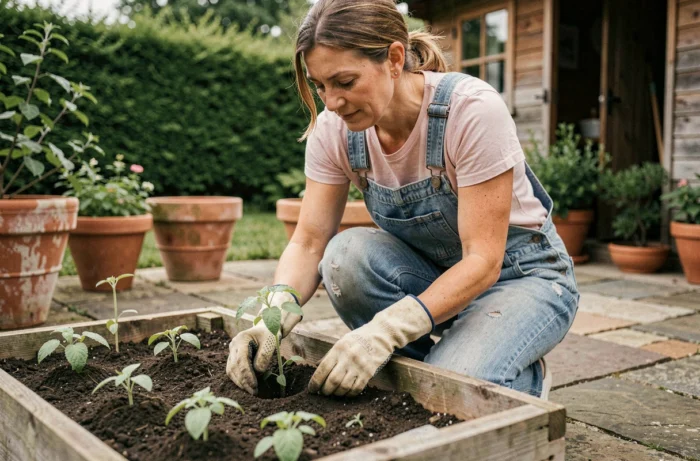
A garden that functions well on a daily basis relies less on the accumulation of good ideas than on a few decisions made at the right time. The soil, exposure, and shape of the plot: these constraints guide everything else, from the choice of plants to the location of a terrace. Successfully designing your garden starts with accepting to work with what already exists.
Soil and exposure: two factors that dictate garden layout
Before choosing a single plant or a material for the terrace, one must observe. Clay soil is not worked the same way as sandy soil. The former retains water and compacts in summer, while the latter drains quickly and becomes impoverished. The nature of the soil determines viable plants and how you can structure your spaces.
Exposure plays an equally decisive role. A south-facing facade requires heat-resistant plants and thoughtful shading for living areas. Conversely, a north-facing garden demands shade-tolerant species and work on brightness (light colors on the ground, water mirrors).
To plan a coherent project, entrusting the study of the land to a professional specializing in garden design with Instant Jardin helps avoid costly mistakes related to a poor initial diagnosis.
Have you ever noticed that some flower beds wither while others thrive just a few meters away? The answer is almost always in the soil-exposure combination, not in maintenance.
Designing an edible and ornamental garden at the same time
Competitors often talk a lot about decorative flower beds and circulation in the garden. They rarely address a trend that has taken a structural place in residential projects since 2024-2025: the ornamental edible garden.
The idea is simple. Instead of separating the vegetable garden from the ornamental garden, we merge them. A tomato plant surrounded by purple basil, squash climbing on a pergola, raspberry bushes as a hedge along a path. The result is both beautiful and productive.
Edible plants with high aesthetic interest
- Artichokes, with their silvery leaves and spectacular flowers, are a great substitute for an ornamental shrub at the back of a flower bed
- Rhubarb, thanks to its large textured leaves, creates a remarkable volume effect at the edge of a terrace
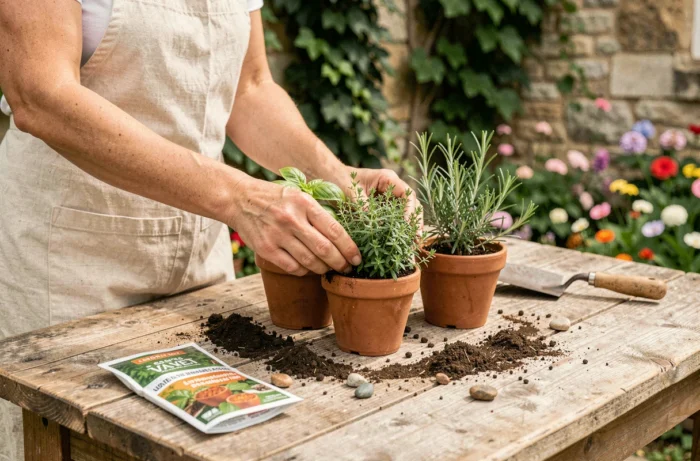
- Mediterranean herbs (thyme, rosemary, sage) form persistent cushions that structure a dry garden all year round
This type of design reduces the area of traditional lawn. According to the Guide Jardins et Paysages, recent developments favor flowering meadows and permaculture areas over classic grass. Uniform lawns are declining in favor of multifunctional spaces.
Materials and budget: balancing between wood, stone, and composite
The choice of materials for a terrace, a path, or a fence weighs heavily in the overall budget of a landscaping project. Three families of materials consistently come up, each with specific constraints.
Wood requires regular maintenance to last. Treated pine, larch, exotic wood: longevity varies, but none can escape periodic treatment (oil, saturator). In return, wood ages gracefully and integrates into almost all garden styles.
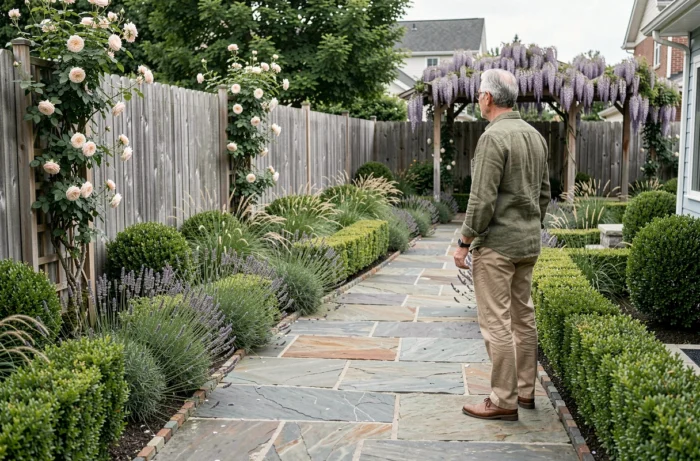
Natural stone (sandstone, slate, travertine) offers superior durability. It is more expensive to purchase and install, but its maintenance is limited to occasional cleaning. For a heavily trafficked path, it is often the most cost-effective choice over time.
Composite (a mix of wood fibers and resin) sits between the two. No treatment necessary, decent resistance, but a feel and appearance that do not convince everyone. Why choose this? Especially when the time dedicated to maintenance is limited.
Biodiversity and regulations: what zero pesticide means for your garden
Since 2019, individuals can no longer use synthetic chemical pesticides in their gardens. This often-unknown ban has direct consequences on the design of an outdoor space.
In practice, this means that every plant choice must incorporate its natural resistance to diseases. Planting a rose bush sensitive to powdery mildew without being able to resort to a chemical fungicide exposes one to disappointments. It is better to select resistant varieties, often recent cultivars labeled for their robustness.
Encouraging beneficial wildlife rather than treating
A garden populated by ladybugs, lacewings, and hedgehogs naturally regulates aphid and slug populations. To attract these beneficials, a few actions are enough:
- Leave a pile of dead wood or leaves in a discreet corner to provide shelter for insects and hedgehogs
- Plant mixed country hedges (privet, hazel, elder) rather than single-species thujas, which harbor almost no wildlife
- Install a water point, even modest (a buried saucer), for pollinators and birds
The decree of August 28, 2026, regarding the unique hedge regime further strengthens the protection of existing hedges. Removing a hedge without prior declaration may expose one to penalties. Before any fencing or boundary restructuring project, checking local regulations helps avoid unpleasant surprises.
A well-designed garden is not just about an aesthetic plan. The soil dictates the plantings, the materials determine the long-term budget, and regulations frame the practices. Starting from these realities rather than an idealized image is the difference between a garden that lasts three seasons and an outdoor space that improves year after year.