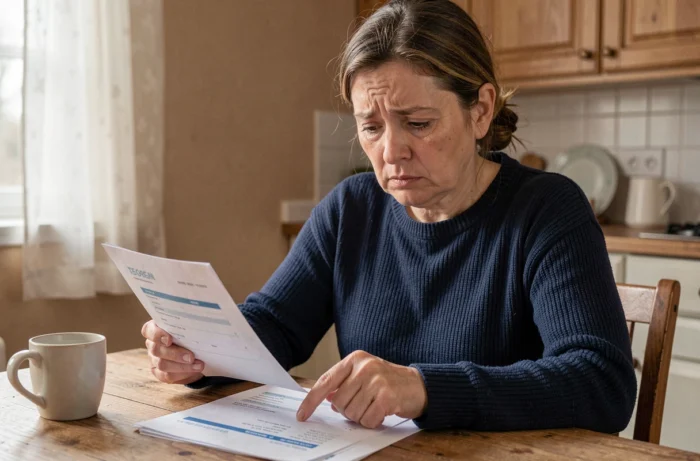
You check your account statement at La Banque Postale and a line “vir debit” appears without a clear label, sometimes without an identifiable beneficiary name. The immediate reflex is to think of an error or fraud. In most cases, the mention corresponds to a standard outgoing transfer, but its truncated display on the client space or mobile app prevents quickly tracing back to the origin of the transaction.
Truncated label on the bank statement: what triggers concern
The problem rarely comes from the transfer itself. It arises from the way La Banque Postale’s information system displays the label. When accessing the online space or receiving a notification by phone, the beneficiary’s name may be cut off, replaced by an internal code, or simply absent.
You then find yourself facing a line “vir debit” followed by an incomprehensible number or reference. This is not the same as a direct debit identified by a creditor. A debit transfer is an outgoing payment order validated from the account, unlike a direct debit initiated by a third party.
For a more detailed explanation of the unknown debit transfer at La Banque Postale, the distinction between these two types of banking operations is the first point to clarify before contacting an advisor.

Unrecognized debit transfer: check before disputing
Before filing a complaint, you save time by doing three simple checks from your client space.
- Compare the amount of the transfer with your recent online purchases or scheduled transfers (rent, subscription, automatic savings). A recurring transfer set up months ago can easily be forgotten.
- Click on the details of the transaction in the app or on the website. La Banque Postale sometimes displays a beneficiary IBAN or additional reference that the PDF statement does not show.
- Check if an instant transfer has been issued from another device connected to the account. Online banking services allow payments to be made from multiple devices, and the notification may only arrive on one of them.
The majority of “unknown” debit transfers correspond to operations forgotten by the account holder. Feedback varies on this point, but advisors at post offices confirm that most requests are resolved at this stage.
Disputing an unauthorized transfer at La Banque Postale
If after verification the transfer does not correspond to any order placed, you enter another realm. Under French law, an unauthorized payment operation must be reported quickly to your bank. The Monetary and Financial Code provides for a reimbursement regime, but with specific conditions.
Report the operation without delay
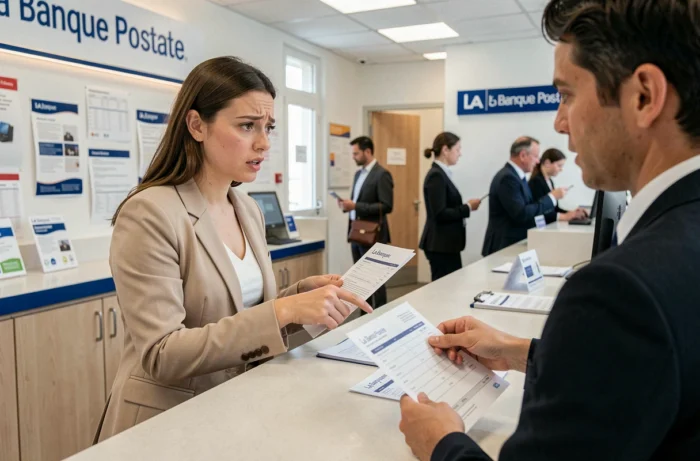
You contact customer service by phone or go to a post office with a statement showing the disputed operation. The reporting deadline conditions the right to reimbursement. The longer you wait, the more the bank can invoke a lack of vigilance.
You should also block your card if you suspect that the transfer is related to phishing or a compromise of your authentication codes. The security of the account requires an immediate change of the access code to the online space.
Transfer validated under manipulation: a more complex case
The situation becomes complicated when the client themselves validated the transfer after being deceived, for example, by a fake bank advisor over the phone. In this case, the bank distinguishes between “unauthorized” transfers (no order given) and “authorized under manipulation” transfers.
This distinction changes the reimbursement procedure. For a truly unauthorized transfer, reimbursement is generally granted unless there is gross negligence on the part of the client. For a transfer validated after a scam, the bank examines the case on a case-by-case basis. It may determine that the client has committed a fault by communicating their authentication codes.
Securing your account against fraudulent transfers
Rather than undergoing a lengthy dispute, you can reduce the risk upstream with a few concrete adjustments in the client space of La Banque Postale.
- Activate real-time notifications for each outgoing transaction. This allows you to spot a suspicious transfer within minutes, not at the monthly statement.
- Limit the daily transfer ceiling. By default, the ceiling is often higher than what you need on a daily basis. Reducing it limits the impact of a fraudulent transfer.
- Never validate an authentication code received by phone if you are not initiating the operation. La Banque Postale never asks you to confirm a transfer via an incoming call.
- Check the list of registered beneficiaries. A beneficiary added without your knowledge is a clear signal of account compromise.
An unknown beneficiary in the registered list justifies an immediate account block. Call La Banque Postale’s opposition number without trying to understand first where the addition came from.
Beneficiary verification: a recent mechanism to know
La Banque Postale has implemented a beneficiary verification mechanism when adding a new IBAN. The system compares the entered name with the one registered with the receiving bank. Three results are possible: complete match, partial match, or no match.
This check does not prevent the transfer, but it warns the client before validation. A “partial match” alert message warrants suspending the operation and verifying the IBAN through a channel other than the one that provided it.
This mechanism does not cover transfers already executed. It only protects new orders. For past operations that appear as “vir debit” without a clear label, the only route remains manual verification and then, if necessary, disputing with customer service.