Transforming an interior is no longer just about choosing a paint color or moving a sofa. Since January 1, 2025, homes rated G on the energy performance certificate (DPE) can no longer be offered for rent, and class F will follow in 2028. Therefore, decorating your home with style involves considering two perspectives: aesthetics and the performance of the building.
Decoration and DPE calendar: what decor trends don’t tell you
Most decor guides treat colors, furniture, and accessories as standalone choices. In a property intended for resale or rental, these choices lose their relevance if the energy rating prevents it from being brought to market.
A simple makeover is not enough to reclassify a property. Public funding does not cover decoration alone: interior painting, changing flooring for personal preference, or aesthetic renovation of a kitchen are not automatically eligible. The programs focus on energy renovation and adapting the housing.
The supported pathway of MaPrimeRénov’ aims for projects that achieve a gain of at least two DPE classes. Before rethinking the decor of a room, checking the insulation of the affected walls helps avoid having to redo everything after a thermal renovation. It is by combining renovation and decoration that decisions become profitable, and you can discover the home page of Tip Top du Web to explore other concrete layout ideas.
| Item | Fundable by public aid | Impact on DPE | Decor impact |
|---|---|---|---|
| Interior wall insulation | Yes (MaPrimeRénov’) | High | Medium (loss of surface, new covering) |
| Window replacement | Yes | Moderate to high | High (brightness, style of joinery) |
| Interior painting only | No | None | High |
| Floor covering (personal preference) | No | None | High |
| Boiler + radiator replacement | Yes | High | Moderate (possible designer radiators) |
Trendy colors and materials: balancing fashion and longevity
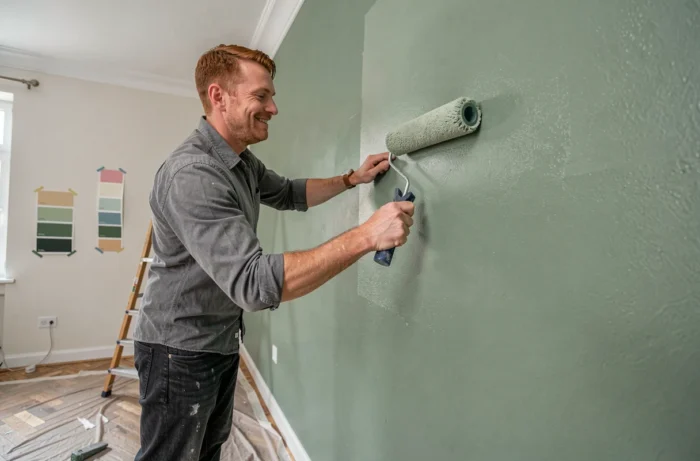
Earth tones, mocha beige, and warm shades dominate the palettes offered by decorators since the start of the school year. Total white, once a safe choice, is declining in favor of duos combining a warm neutral base with a strong colored accent.
Walnut and rounded curves are taking over in furniture. Strong pieces in dark wood are replacing the straight lines and blonde finishes of strict Scandinavian style. This trend values furniture designed to last, which aligns with a simple calculation: a quality piece amortized over fifteen years costs less than a succession of disposable items.
What should last and what can follow trends
In a kitchen, the countertop, facades, and layout are structural elements that should last about twenty years. In contrast, the backsplash, handles, and accessories can evolve with changing tastes without requiring major renovations.
- Elements to choose for durability: flooring, joinery, kitchen layout, built-in sanitary fixtures.
- Modifiable elements without heavy work: textiles (curtains, cushions, rugs), lighting, adhesive backsplash, cabinet handles.
- High visual impact elements for a limited budget: painting a single accent wall, mirrors positioned facing a light source, large green plants.
Differentiating between lasting elements and ephemeral ones prevents cascading renovations. A neutral ceramic tile floor can support any wall palette for years, while a very dated patterned tile will require costly replacement.
Living room layout: data to consider before choosing
The living room generally concentrates the majority of the decor budget. However, two parameters condition the results more than the choice of sofa: the available natural light and the actual circulation space.
A north-facing living room does not react to the same colors as a south-facing one. Warm shades (terracotta, mocha) correct cold light, while a very sunny space can handle cooler tones without appearing austere. Testing a paint sample on the relevant wall at different times of the day remains the most reliable method.
Curves in furniture, rounded chairs or oval tables, facilitate circulation in modestly sized rooms. Conversely, right angles better structure a large open volume by creating distinct visual zones.
Plants and lighting: two underestimated levers in interior decoration
Green plants are not just decorative touches. They alter the perception of volumes and absorb some of the noise in open spaces. A few tall specimens positioned in a blind corner are enough to break the monotony of a blank wall without resorting to additional shelves.
Lighting works in layers. Multiplying low light sources transforms the ambiance more than a single ceiling fixture. A reading lamp near a chair, an indirect floor lamp behind a sofa, and candles on a coffee table create three levels of light that adapt to different times of the day.
Common mistake with lighting
Replacing all bulbs with cold white LEDs to save energy degrades the atmosphere of a living room designed in warm tones. The color temperature of the bulb must match the wall palette. A mocha beige wall lit with cold white turns grayish.
Cross-referencing the DPE calendar with decorative choices, distinguishing between durable elements and modifiable ones, and testing colors and lighting on-site before purchasing: these three reflexes transform a superficial makeover into a coherent layout that retains its value over time.