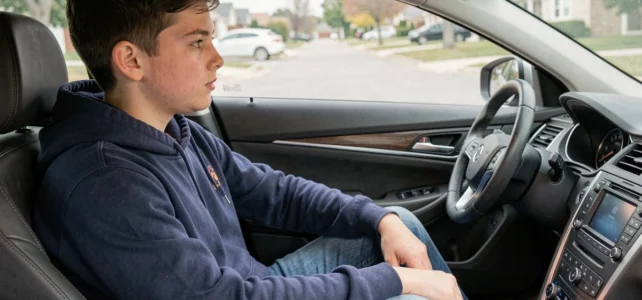
Registration for accompanied driving is possible from the age of 15, but it is at 16 that the process takes on a concrete dimension: the candidate accumulates supervised kilometers and gets closer to the practical exam, now accessible from the age of 17. Understanding the precise regulatory calendar for each step avoids administrative blockages that delay the issuance of the license.
Probationary license and accompanied driving: the calculation that 16-year-old candidates ignore
The early learning driving program (AAC) modifies the duration of the probationary license. A driver from the classic pathway remains on probation for three years, with a gradual accumulation of points. In AAC, this duration is reduced to two years.
For a young person who starts driving alone at 17, the difference is tangible. They reach their maximum points capital earlier, which reduces the window of vulnerability to infractions that could lead to a withdrawal. We recommend that families incorporate this parameter into their choice of formula, as the reduced probationary period in AAC concretely protects the young driver.
One administrative friction point deserves attention: after passing the practical exam at 17, the request for the issuance of the driving license may be denied if it is made too early. Some prefectures only issue the final license after a complete verification of the ANTS file, which creates a gap between passing and receiving the document. Anticipating the creation of the ANTS account and the submission of supporting documents several weeks before the exam date remains the best strategy.
To fully understand the steps for obtaining a license at 16, it is essential to distinguish between what pertains to the driving school (registration, initial training) and what pertains to the candidate themselves (ANTS file, insurer’s agreement, designation of the accompanying person).
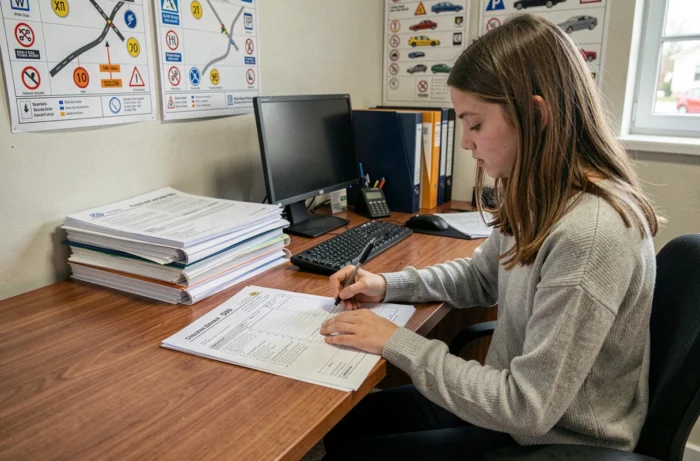
ANTS registration and NEPH number: sequencing the steps before 17
The request for a NEPH number on the ANTS website is the administrative prerequisite for any registration for the exam. Without this number, neither the code nor the driving can be scheduled. Registration is open from the age of 15 for the AAC pathway.
Documents required for the NEPH request
- Identity proof of the minor candidate and the legal representative who signs the request
- Digitized photo and signature in the regulatory format (e-photo or approved photobooth)
- Proof of residence less than six months old, in the name of the legal representative
- Certificate of registration or certificate of participation in the defense and citizenship day (depending on age)
The processing of the ANTS file takes an average of several weeks, sometimes longer during peak periods. Submitting the request as soon as the candidate turns 15 allows for obtaining the NEPH well before the start of practical training.
Insurer’s agreement and designation of the accompanying person
The accompanying person must have held a B license for at least five years without any current cancellation or invalidation. The insurer of the vehicle used for the accompanied phase must provide a written agreement mentioning the candidate’s name. This document is required by the driving school before issuing the initial training completion certificate (AFFI).
We observe that this step is often overlooked until the last moment, while a refusal or delay from the insurer can postpone the start of supervised driving by several weeks.
General theoretical test and practical training: the real calendar at 16
The general theoretical test (the code) is accessible from the age of 15 in the AAC pathway. Its validity is five years, which leaves a comfortable margin. However, the AFFI marks the true starting point of accompanied driving, and it can only be issued after a minimum of twenty hours of practical training in a driving school.
Once the AFFI is obtained, the candidate enters the supervised driving phase. This phase imposes a minimum journey before presenting for the practical exam. The mandatory intermediate educational appointment is scheduled between four and six months after the start of accompanied driving.
The second educational appointment occurs at least two months before the presentation for the exam. This sequencing imposes an unavoidable delay of about a year between the AFFI and the practical exam. A candidate who obtains their AFFI at 16 will therefore not be able to present for the practical test before turning 17, which coincides with the legal minimum age since the reform that came into effect on January 1, 2024.

Financing the license at 16: CPF, regional aids, and one-euro license loan
The minor candidate does not have access to the personal training account (CPF), which is reserved for active individuals. Since 2026, access to the CPF for light vehicle licenses has become more restrictive, including for adult candidates. The one-euro-per-day license loan remains the main aid available for young people aged 15 to 25 enrolled in initial training at a partner driving school.
This loan is granted by approved banking institutions, without income conditions. The state covers the interest. The amount can cover the entire driving school package, within the limits set by decree.
- One-euro-per-day license loan: accessible from 15 years old, interest-free for the borrower, legally capped
- Regional or departmental aids: variable depending on the territory, often conditioned to a commitment (civic service, apprenticeship)
- Municipal license grant: some municipalities fund part of the package in exchange for hours of volunteering
Families who anticipate financing before the start of training avoid interruptions in the process due to unpaid fees, the primary cause of extended delays in driving schools.
The path to obtaining a license at 16 is not a shortcut: it is a precise calendar where each administrative step conditions the next. Creating the ANTS account as soon as the candidate turns 15 and obtaining the insurer’s agreement before the AFFI are the two levers that prevent the schedule from slipping. The real gain is measured at 17, when the AAC candidate takes the practical exam with a shortened probationary period and several thousand kilometers of experience.