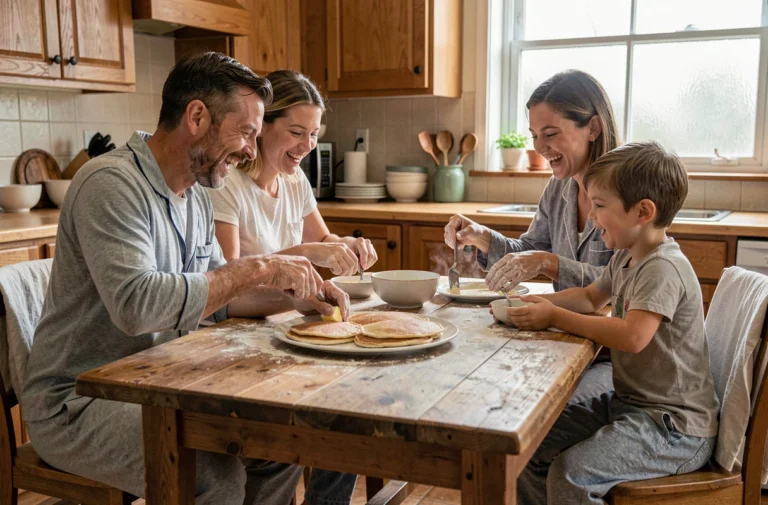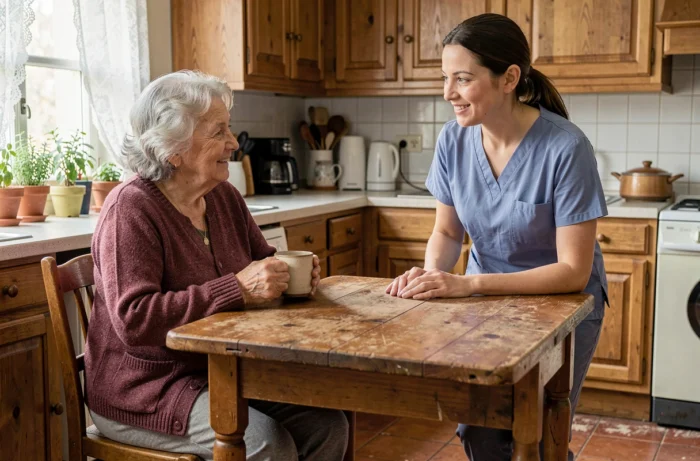
Remaining at home in old age depends on a combination of conditions that rarely come together from the outset: suitable housing, coordinated care providers, and financial assistance secured at the right time.
Since the law of April 8, 2024, a new institutional framework, the Departmental Public Service for Autonomy (SPDA), has sought to organize this coordination at the local level. However, its rollout remains uneven across regions, with an operational phase expected in several departments in early 2027.
Returning home from hospital: a critical moment for staying at home
Returning home after a hospital stay is a pivotal moment for older people. It is during this transition that the risk of losing independence increases.
A poorly planned return can lead to a relapse, another fall, or sudden isolation. The issue is not just medical. Before discharge, it is important to check that planned services (home care aide, meal delivery, nursing visits) are actually scheduled, that information has been shared with the primary care physician, and that someone can be reached if problems arise in the first few days.
Among the organizations that support people through this transition, Cydlab’s senior services help identify practical needs and coordinate the support best suited to each situation.
Coordination between hospital and home remains a weak point in the French system. Where it is operational, the SPDA aims to make this transition smoother by centralizing referrals and connecting healthcare, social care, and medico-social services.
Financial assistance for seniors living at home: a changing landscape
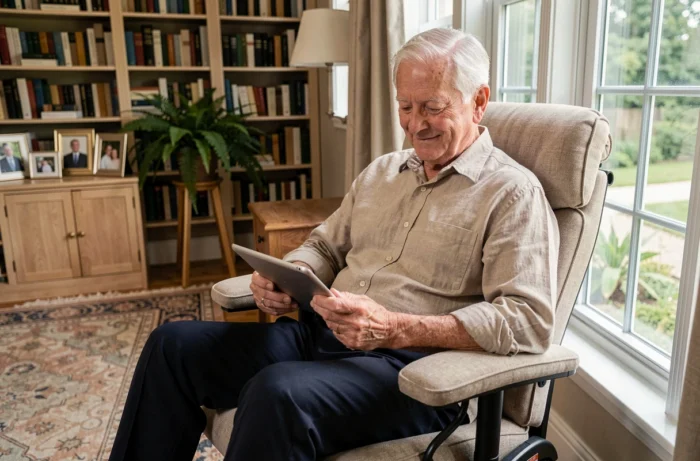
APA (personalized autonomy allowance), MaPrimeAdapt’, and the tax credit are the three main sources of funding for staying at home. How they work together is not always clear to families.
APA at home: out-of-pocket costs could change
APA funds a personalized support plan, with the amount depending on the level of loss of independence (GIR 1 to 4). The out-of-pocket cost varies according to the recipient’s income. In October 2026, a draft decree proposes further adjusting this out-of-pocket cost based on the spouse’s income and the number of hours included in the support plan.
If adopted, this change could increase costs for some households. Organizations representing older people and caregivers have raised concerns about the measure, which was still under consultation when this article was written.
MaPrimeAdapt’: for home adaptations
Created to fund home adaptations (level-access showers, grab bars, stairlifts), MaPrimeAdapt’ is available to owner-occupiers and, subject to certain conditions, tenants. Eligibility depends on income and the type of work planned. Partner contractors and companies generally carry out a technical assessment before providing a quote.
The priority areas to adapt are the bathroom, toilet, and access points (entrance, stairs). Simple changes, such as removing door thresholds or installing handrails, can be enough to significantly reduce the risk of falls.
Coordinating home services: what the SPDA changes
The Departmental Public Service for Autonomy was created in response to a clear problem: seniors and their caregivers have to navigate multiple contacts without a single point of access. Information is poorly shared between the CCAS, the department, CPAM, SSIAD, and home care services.
The SPDA brings reception, information, referral, and coordination services under a single governance structure. In the pioneering departments, early feedback points to a clearer support pathway for families. Initial assessments reveal regional disparities: pioneering departments have significantly more structured coordination than others.
In departments where the scheme has not yet been rolled out, seniors are still referred through traditional channels, which are often fragmented. The quality of support then depends largely on local community organizations and caregivers’ ability to find information on their own.
Home care services: more than housekeeping
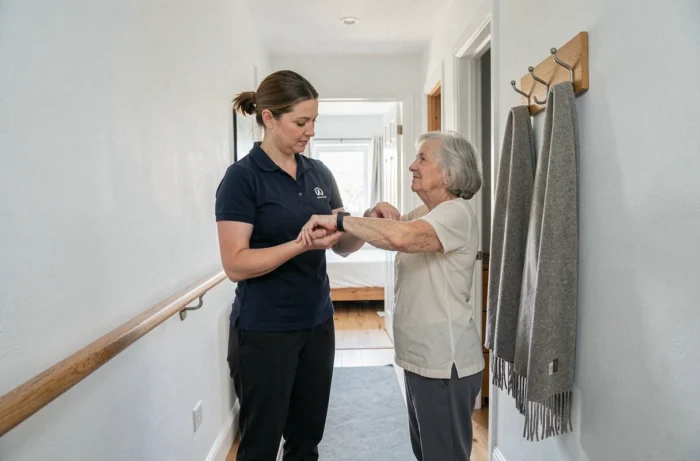
Staying at home involves more than cleaning and shopping. The needs of an older person losing independence are wide-ranging and change over time.
- Personal care includes home care aides who help with daily activities (bathing, dressing, meals), housekeeping, meal delivery, and accompaniment on outings or to medical appointments.
- Home healthcare, provided by independent nurses or SSIAD, covers clinical care (dressings, injections) and monitoring of chronic conditions.
- Technology-based support, such as telecare, makes it possible to raise an alert in the event of a fall or medical emergency, day or night. Motion sensors and connected pill dispensers offer additional support.
- Psychological and social support, which is still often overlooked, aims to combat isolation through friendly visits, group activities, and support for family caregivers.
The choice of services depends on a person’s level of independence, as well as their family situation. A senior with a strong support network has different needs from someone living alone in a rural area, where access to healthcare professionals may be limited.
Limits of staying at home: the blind spots
The prevailing view presents staying at home as preferable to living in a nursing home. This widely held preference can obscure situations where remaining at home becomes a risk factor rather than a safeguard.
Falls are one of the leading causes of accidental death among older people in France. An unsuitable home, an inadequate support plan, or exhaustion on the part of the primary caregiver can turn the home into a dangerous environment.
It remains difficult to determine objectively when a home is no longer a viable option. Assessment tools (GIR, AGGIR scale) measure dependency, but do not capture social isolation or the vulnerability of a person’s support network. No standardized indicator measures how well the surrounding environment can support a senior over the long term.
Staying at home works when services are coordinated, the home is adapted, and the person’s support network receives help. When one of these pillars gives way, the situation can deteriorate quickly, sometimes without anyone raising the alarm in time.