A fashion trend is not just about a piece of clothing spotted on a runway. It is a deep movement that connects choices of colors, cuts, and materials to a specific context. This season, fashion trends are structured around two axes: a color palette polarized between bright tones and natural shades, and silhouettes that favor controlled volume.
Anti-fast fashion law and fashion trends: the regulatory filter that changes the game
The clothing trends of 2026 are now viewed through a direct regulatory constraint. The French anti-fast fashion law, definitively adopted, is set to take effect on September 1, 2026, with a penalty on non-sustainable clothing. This penalty targets mass-produced items made from low-durability materials.
The link between style and sustainability is becoming concrete. Buying a trendy piece involves checking its composition, weight, and finish. An oversized wool blend blazer or a flowy certified viscose dress will not incur the same extra cost as a low-quality synthetic equivalent.
This framework encourages the preference for versatile pieces that can be worn across multiple seasons. The collections that traverse fashion on the Ei Mag site confirm this direction towards clothing designed to last beyond a single season.
Trendy colors 2026: polarization between saturated brights and natural tones
The palette for this season is not limited to a single standout color. The shades are polarized between bright colors and natural tones, resulting in a season that is less homogeneous than usual.
Wine Bordeaux, foundational color
Bordeaux is not new this season. This shade has been building over several collections and is already establishing itself as a pillar for Cruise 27. It is a foundational color, not a fleeting fashion effect. It works well on structured pants, a thick knit sweater, or a leather accessory.
Soft white cloud dancer
The cloud dancer pattern, a slightly warm white, is emerging as an alternative to optical white. It softens silhouettes without dulling them and pairs well with both saturated shades and olive or beige tones.
On the bright side: orange, pink, yellow
Saturated colors appear in touches. Bright orange on a short jacket, pink on a midi skirt, yellow on a structured tee-shirt. The approach works when a single bright piece anchors the look, while the rest remains understated.
- Olive and sky blue for the basics: trousers, blazers, lightweight shirts. These natural tones serve as a backdrop.
- Bordeaux and terracotta for intermediate pieces: sweaters, vests, bags. They add depth without overwhelming the silhouette.
- Orange, pink, or yellow as a unique accent: a single bright element per outfit is enough to create a readable contrast.
Key silhouettes: oversized blazer, buttoned vest, and fringes
Three pieces return with a coherent silhouette that should be understood together, not separately. The trio of oversized blazer, buttoned vest, and fringes creates a wardrobe where volume is worn structured, not blurry.
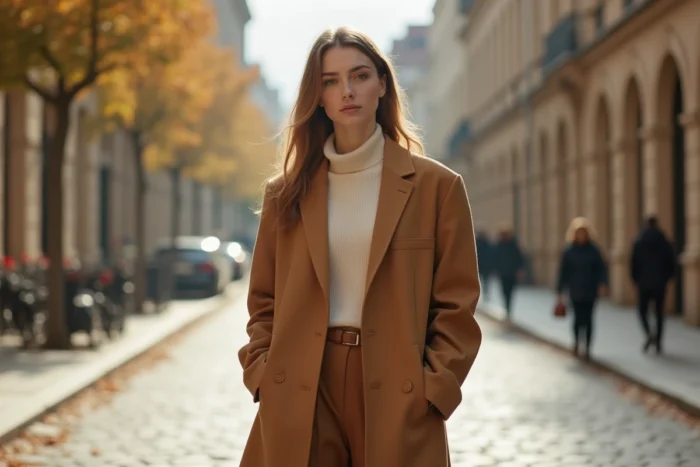
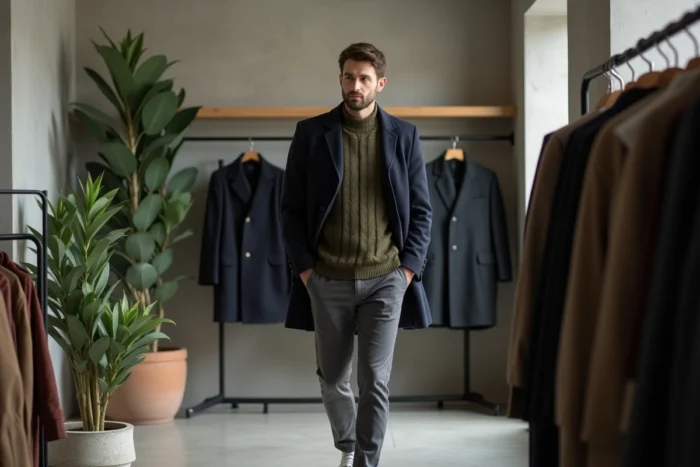
The oversized blazer of 2026 stands out from its previous versions with a more defined shoulder. The fullness remains in the bust and length, not in an undefined drape. Worn open over a fitted tee-shirt, it creates a sharp contrast of proportions.
The buttoned vest, long confined to the preppy realm, returns in heavier materials. Ribbed knit, boiled wool, thick cotton: it works as a visible intermediate layer, not as a hidden underlayer. Buttoned all the way up, with nothing underneath, it is enough to compose a top.
Fringes reappear on structured pieces: jacket edges, skirt hems, scarf ends. Their role is to break the rigidity of an architectural cut. Fringes work when they remain a detail, not a total pattern.
Building a coherent seasonal wardrobe with these trends
Adopting multiple trends without creating a disjointed look requires a layering logic. The principle is based on three levels of pieces.
The base, first. A structured wide-leg pant in a natural tone (olive, beige, sky blue) or a barrel jean serves as the foundation. This piece does not change from one outing to the next. It absorbs all the combinations above.
The intermediate layer, next. This is where the buttoned vest or oversized blazer comes into play. This piece sets the tone for the outfit. A thick knit bordeaux vest over olive pants produces a very different result than a cream blazer over the same pants.
The accent, finally. A single piece or accessory in a bright color, or a fringed element. Not two. A seasonal wardrobe relies on five to seven well-chosen pieces, not on an accumulation of trends worn simultaneously.
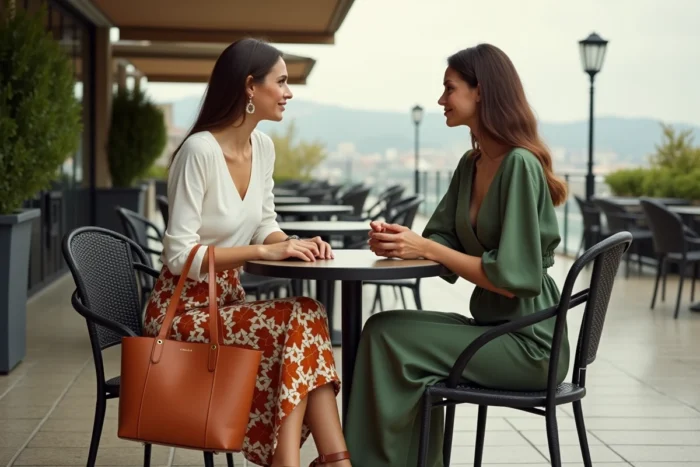
- Long flowy dress in certified viscose: worn alone in summer, under a blazer in mid-season. Maximum versatility for a single investment.
- Coordinated outfit in tone-on-tone: an option that simplifies daily choices while producing a structured look effortlessly.
- Expressive accessory (brooch, thin belt, colorful bag): the least expensive lever to update an existing wardrobe.
The real guiding principle of this season lies in the balance between durable pieces and temporary accents. With a regulatory penalty looming, investing in a solid foundation and modulating trends through accessories or a single strong piece remains the most coherent strategy, both for style and budget.