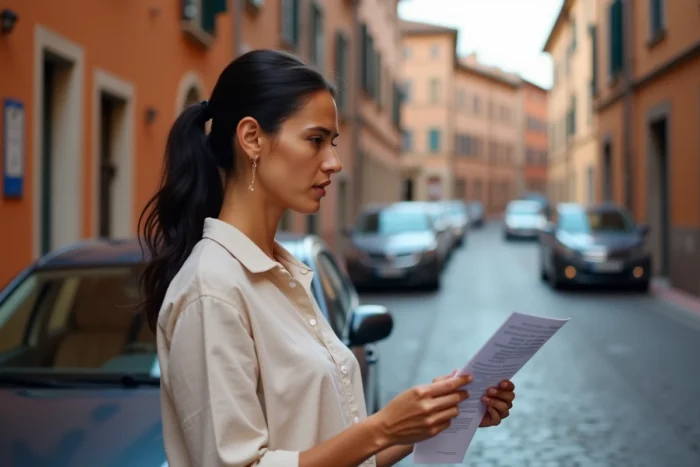
You return from vacation in Italy and find a letter in your mailbox demanding payment of a traffic fine. The document seems official, the amount is high, and a sense of urgency pushes you to pay quickly. This scenario affects thousands of French travelers every summer. Distinguishing a real Italian fine from a scam attempt requires knowledge of a few specific mechanisms.
The legal discount of 5 days, the first anti-scam filter
Before discussing fake tickets, it’s important to understand how a real Italian fine works. The Italian Highway Code provides for a reduction of about 30% if payment is made within 5 days of the official notification. This provision is systematically mentioned on authentic fines.
A letter or SMS requesting payment without mentioning this legal discount is a reliable warning sign. Scammers replicate the appearance of official documents but almost always omit this technical detail because they want to maximize the amount collected.
To better understand the mechanisms of fraud and avoid a fine scam in Italy, check that any notification received explicitly mentions the reduced time frame and the associated percentage reduction.
What an official Italian notification contains
A real ticket sent by the Italian authorities arrives by registered mail. It mentions the vehicle, the date and location of the offense, the total amount, the reduced amount, the avenues for appeal, and the contact details of the issuing office. If any of these elements are missing, caution is advised.

ZTL Zones in Italy: real fines often confused with scams
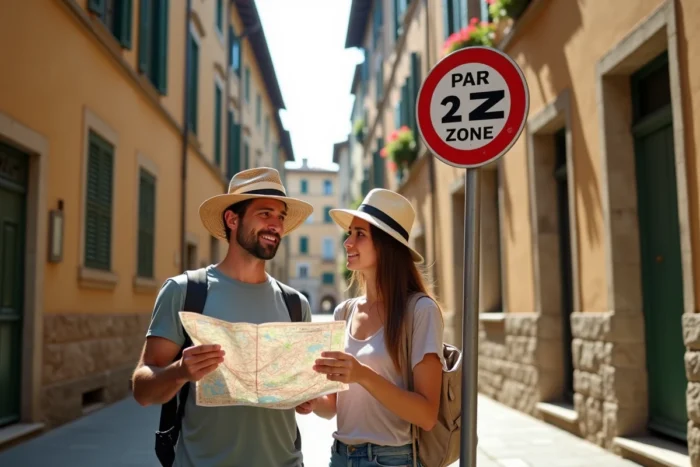
Have you ever driven in the historic center of an Italian city without noticing the small round white and red sign? ZTLs (Zona a Traffico Limitato) regularly trap foreign drivers. Automatic cameras photograph license plates and trigger the sending of a fine, sometimes several months after the passage.
The problem: receiving a ZTL fine long after your trip feels like a scam. The time lag, combined with a document in Italian, leads many French people to believe it’s a fake ticket. In reality, the administrative processing times between Italy and France explain this delay.
How to verify the authenticity of a ZTL fine
- Check that the letter comes from an identifiable Italian municipality (mention of “Comune di…” with a protocol number)
- Verify the presence of a photo of your license plate, often attached or accessible online via a code
- Look on the official website of the relevant municipality to see if a payment portal exists, and compare the IBAN provided with that in the letter
- Confirm that the reduced amount for quick payment is clearly stated on the document
If the letter directs you to a website whose domain name does not end in .it or .gov.it, there is a strong chance it is a phishing attempt.
Fake police and fake fines on the spot: techniques observed in 2026
The French press reported a rise in fake police scams in major Italian tourist cities during the summer of 2026. The scenario is well-rehearsed: a person in plain clothes or wearing a makeshift uniform approaches you, pretends to conduct an identity or vehicle check, and demands immediate cash payment of a fine.
No Italian traffic fine is settled in cash on the spot with a lone officer. Italian law enforcement issues a paper ticket and never asks for cash payment on the street. Refuse, request a written document, and note the badge number displayed on the uniform.
Digital variant: fraudulent SMS and emails
SMS messages imitating Italian authorities circulate during the summer season. They contain a link to a payment form and mention a very short deadline (24 or 48 hours) to benefit from a reduced rate. Italian authorities never send fines by SMS or email. Notifications are sent exclusively by registered mail.
Italian reform of traffic fines: what has changed recently
Italy has adopted law 177/2024, which has tightened the regime of traffic fines. The amounts for speeding, illegal parking, and crossing ZTLs have increased. This legislative context inadvertently fuels scams: scammers rely on the fact that travelers have heard about higher amounts and therefore find it plausible to receive a hefty fine.
In practice, a legal tightening does not change the notification channel. Whether the amount is modest or high, the procedure remains the same: registered mail, complete legal mentions, and the possibility of contestation.
Contesting an Italian fine from France
Real Italian fines can be contested. The official document indicates the appeal period (usually 60 days) and the competent authority. If you believe that the offense did not occur, a registered letter to the issuing office is sufficient to initiate the procedure. The Service-Public.fr website details the steps for fines received from a European Union country.
Summary of warning signs for a fake Italian fine
- Absence of mention of the legal discount for payment within 5 days
- Request for payment by SMS, email, or via a site with a suspicious domain
- Payment demanded in cash or by transfer to a non-institutional account
- Document without a protocol number, without a photo of the license plate, or without verifiable contact details of the issuing municipality
- Unusually short payment deadline (24-48 hours) accompanied by threats of immediate prosecution
The most reliable reflex remains to never pay a fine without having verified its origin directly with the relevant Italian municipality. A call or email to the local municipal police office can confirm or deny the existence of the ticket within a few days. In the face of doubt, slowness protects better than haste.